
Water damage restoration is the work of removing water from a building, drying what is wet and repairing what could not be saved. It covers a burst pipe, a failed water heater, a clogged AC drain that overflowed, a roof leak after a storm and a dishwasher that let go. The sooner it starts, the more can be saved. The EPA's guidance for wet buildings is to dry materials within 24 to 48 hours to prevent mold growth, and in a part of the country where the air outside is already close to saturated, that window is not generous. Here is what the work involves, in order, and what to do and ask while you wait.
If the water came from a storm surge or rising water outside, see flood damage restoration. If it is sewage or drain backup, see sewage cleanup. Both carry extra rules.
First steps while you wait
- Stop the water if you can. Shut off the main or the fixture valve. For a roof leak, put a bucket or a tarp where it helps and do not climb on a wet roof.
- Turn off power to wet areas at the breaker if it is safe to reach. Never stand in water to reach a panel. If water is near outlets or the panel, stay out and call an electrician.
- Take photos and video of the damage before you move anything. Insurance claims go more smoothly with them.
- Lift what you can. Pull small furniture, rugs and valuables out of the water. Put aluminum foil or blocks under furniture legs on wet carpet.
- Open interior doors and closets so air can reach wet walls, and run the AC if the system is dry and working. In summer, closing the house and running the AC with a dehumidifier is better than opening windows to wet outdoor air.
- Do not use a household vacuum on standing water, and do not run ceiling fixtures under a wet ceiling.
- Keep kids and pets out of the wet area.
Water removal and emergency water extraction
The first technical step is getting standing water out. Crews use submersible pumps for depth and truck-mounted or portable extractors for carpet and floors. Extraction on carpet and pad removes a large share of the water before drying even begins, and it makes the drying faster and cheaper.
Pulling the water out quickly matters for a few reasons:
- Water wicks upward into drywall, baseboards and the bottom of cabinets.
- Wet insulation and carpet pad hold water for a long time.
- Humidity in the room rises, spreading moisture to dry areas.
- In warm weather, bacteria and mold both grow quickly.
Expect the crew to ask where the water came from, how long it has been there and whether it was clean water from a supply line or something worse, because that decides what can be dried in place and what comes out.
What kind of water it is
Restoration companies sort water by the source, because it changes the plan.
- Clean water comes from a supply line, a water heater, a sink or rain through a roof. It is the easiest to handle, and it does not stay clean. After a day or two it begins to carry bacteria and mold.
- Gray water comes from washing machines, dishwashers and sinks with soap and food waste. Materials can often be dried with extra cleaning.
- Black water includes sewage and floodwater. Porous materials generally come out, and the work follows stricter safety steps.
A crew that treats every job as clean water is cutting corners. A crew that treats every job as a biohazard may be selling more than you need. A reasonable one tells you why.
The drying process
1. Inspection and moisture mapping. Meters and a thermal camera map where the water went. Water travels along studs, under flooring and through cabinet toe kicks, and it is often found well beyond the wet spot you can see. The crew records readings so progress can be measured.
2. Removal of what cannot be saved. Wet carpet pad, soaked insulation, saturated drywall and swollen particleboard cabinetry are common removals. Drywall that was wet from clean water for a short time is sometimes dried in place, but drywall that has been wet for days, or that has been wet from a dirty source, is cut out.
3. Flood cuts or small openings. To dry a wall cavity, crews may pull baseboards, drill small holes or remove the lower part of drywall so air reaches the studs and insulation behind.
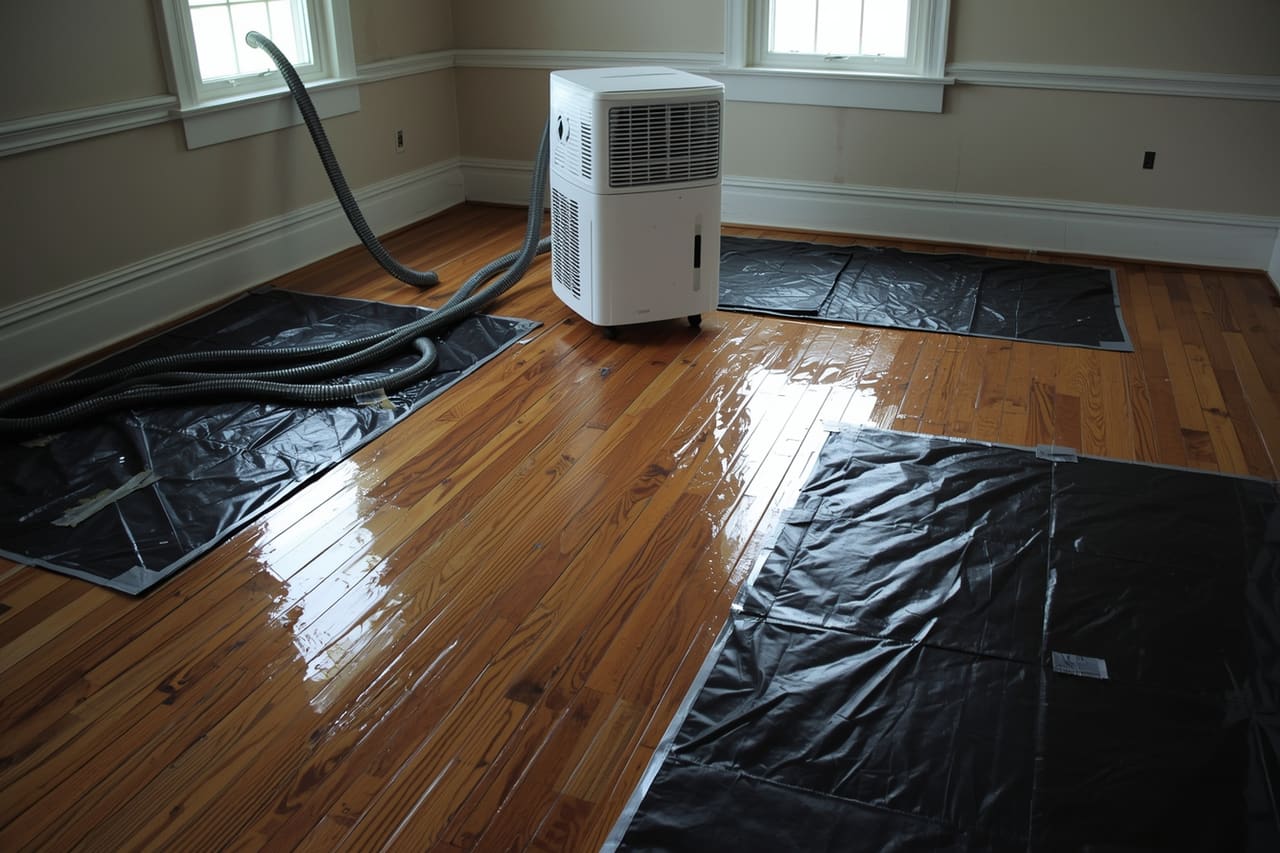
4. Setting drying equipment. Air movers push air across wet surfaces. Dehumidifiers pull water out of the air so it does not just settle elsewhere. Specialty setups dry floors from below or inside wall cavities. The equipment runs continuously, usually for a few days.
5. Monitoring. Each day someone returns to take readings, move equipment and decide what else needs to come out. Drying is done when the materials match the readings of dry materials in an unaffected part of the house, not when the room feels dry.
6. Cleaning and treatment. Surfaces that were wet get cleaned. Affected contents get cleaned or discarded.
7. Hand-off to repair. Replacing drywall, flooring, paint and trim is a separate stage, covered under repairs after water damage.
Water damage in Lowcountry homes
Local conditions change what drying looks like.
Humid outdoor air. In summer, opening windows can slow drying. Controlled drying with dehumidifiers and a closed house works better.
Crawl spaces and raised floors. Water that gets under a raised home soaks insulation and subfloors and takes a long time to dry. Wet batts hanging from the floor hold moisture against the wood. See crawl space mold removal.
Slab homes. A leak in a supply line under or in a slab can wet the subfloor, flooring and baseboards for weeks. Signs include warm spots on the floor, a water meter that moves with everything off and a damp smell.
Attic air handlers. A clogged condensate line or cracked drain pan can drip into a ceiling. Water stains on the ceiling near a hall closet, or a musty smell in a room that runs cold, is a clue.
Water heaters. Tanks in garages and closets fail with little warning. A tank that leaks slowly can wet the wall behind it for a long time.
Windows and stucco. Salt air and wind-driven rain push water through caulking, window frames and small stucco cracks. Damage often shows up months later as a stain or soft trim.
Historic floors and plaster. Old Savannah and Beaufort homes often have heart pine floors and plaster walls. Heart pine can often be saved by drying slowly, because fast drying can make boards cup, split or gap. Plaster over lath holds moisture and is harder to dry than drywall. Preservation concerns matter here: ask the crew about their experience with old materials, and for exterior changes to a historic building, check with the city's historic preservation office before anything visible changes.
Storm season. Hurricane season runs June to November. Storms bring roof damage, window leaks and, in low areas, rising water. Tropical Storm Debby in August 2024 flooded parts of Savannah and Bluffton. See storm damage restoration for storm-specific steps.
When water damage turns into a mold problem
Mold can begin growing within a day or two on wet materials, and warm humid conditions speed it up. If something stayed wet for several days, if you smell mustiness, or if you see spots on drywall, baseboards or the underside of flooring, treat it as water damage and mold together. A dry house with no growth means the drying worked. A dry house with growth needs mold removal as a separate step, and a mold inspection can help decide whether anything is still hidden.
What to ask before you sign
- Who will be on site, and who is responsible for the job?
- What is the written scope, and what does the price include? Equipment days, monitoring visits and removal should be listed.
- How will drying be documented, and will you get the readings?
- What is excluded, such as rebuild, paint and contents?
- How does the company work with your insurance, and what does it need from you? Do not assume the company decides what the insurer pays.
- For repair work after drying, can you see the contractor's state license number?
Georgia and South Carolina do not license mold work today, but rebuild and repair work above small amounts generally needs a contractor with a state license, so ask for the license number for that part and check it with the Georgia State Licensing Board for Residential and General Contractors or the South Carolina Department of Labor, Licensing and Regulation. Ask for proof of liability insurance too, and confirm it with the insurer.
Insurance and documentation
Homeowners policies commonly cover sudden and accidental water damage, such as a burst pipe or an appliance failure, and commonly exclude flooding and long-term seepage. Flood insurance is a separate policy through the National Flood Insurance Program or a private carrier. Read your policy or ask your agent before you start, and report the loss promptly. Keep damaged items until the adjuster has seen them or approved their disposal. Save receipts for emergency work and temporary housing.
What it costs, in general terms
Costs depend on how much water, how long it stood, what kind it was and how many rooms were affected. A small clean-water job in one room can be a few thousand dollars with drying. A multi-room loss, a slab leak with flooring and cabinets, or a job with a lot of demolition can run much higher. Rebuild is usually billed separately from drying. A written scope with equipment, days and demolition spelled out is the only way to compare quotes.
Where to go next
For a pipe that burst, see burst pipe water damage. For wet belongings, contents pack-out. For the repairs afterward, repairs after water damage. If it is a second home or rental, the guide on closed-up homes and rentals covers what to check when you are not there.