
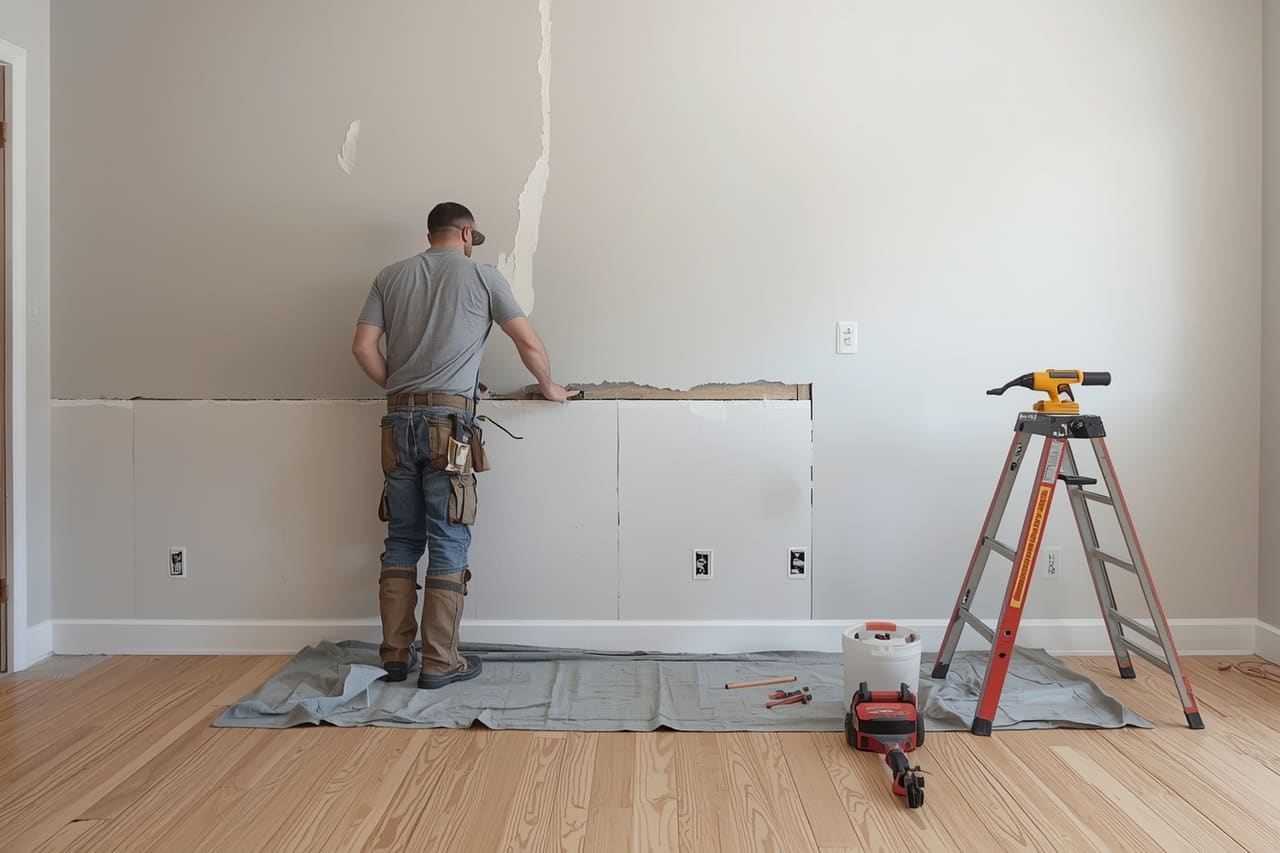
Drying and rebuilding are separate jobs, and often separate companies. The drying crew gets the structure to a normal moisture level and removes what could not be saved. Rebuild puts the house back: drywall, insulation, flooring, cabinets, trim, paint and sometimes subfloor or framing. In Lowcountry humidity, the order matters more than usual, because materials closed up while still damp can grow mold behind new finishes.
Wait for dry readings
Repairs should start only after moisture readings show the framing, subfloor and remaining materials at normal levels, matching an unaffected part of the same house. Ask for the readings in writing. A room that feels dry is not evidence. The EPA advice to dry wet materials within 24 to 48 hours prevents most mold, and when drying ran longer, a check for growth before closing walls is worth the time. See water damage restoration and, if growth was found, mold removal.
What rebuild covers
Drywall and insulation. Replaced where cut out. Insulation should be dry and installed to match the rest of the wall.
Paint and trim. A moisture-resistant primer helps on lower walls. Baseboards that swelled or stained are replaced rather than repainted.
Flooring. Carpet and pad, vinyl, tile, engineered wood and solid hardwood each react differently to water. Subfloor that stayed wet may be dried and kept, or replaced.
Cabinets and counters. Particleboard cabinets that swelled are replaced. Solid wood can sometimes be dried and repaired.
Framing and subfloor. Soft, rotted or insect-damaged wood is replaced. If wet wood shows signs of termites or other wood-destroying insects, a pest professional should inspect it before it is covered up.
Electrical and plumbing. Wiring and fixtures that got wet need an electrician's check, and plumbing repairs are done by a plumber.
Old Savannah and Beaufort homes
Older houses need care that a standard rebuild does not give.
Heart pine floors. Many old floors are heart pine, a dense wood that is hard to replace. Fast drying can cup or split boards, so crews often dry slowly with controlled humidity. If boards must be replaced, matching old wood takes sourcing, such as salvaged lumber, and the match may never be exact.
Plaster walls. Plaster over lath handles repair differently than drywall. Patching and skim coats are possible, but small cracks are likely, and whole-wall replacement changes the character of the room. A plasterer is a different trade than a drywall hanger.
Millwork and windows. Old trim and window sashes can often be repaired and reused. Matching profiles may need custom milling.
Exterior changes. Savannah and Beaufort have historic districts with review. Check with the city's historic preservation office before changing visible exterior materials, including windows, siding and stucco.
Lead paint and asbestos. Houses built before 1978 may have lead paint, and some older materials may contain asbestos. Sanding, cutting and demolition can release particles. Ask the contractor how they handle both, and consider testing the material before work. The EPA's pages at epa.gov explain the basics.
Coastal conditions to build for
- Humidity and moisture control. Rebuild with moisture in mind: moisture-resistant drywall in baths and laundry, good ventilation, and AC drain pans and lines that work.
- Salt air. Corrosion-resistant fasteners and hardware matter near the water, on Tybee, Hilton Head and the marsh edge.
- Raised floors. Insulation under a raised floor should be rebuilt along with a working vapor barrier and humidity control, or the same wet cycle starts again. See crawl space mold removal.
- Future storms. If you are rebuilding after a flood, ask your local building office about flood-related requirements and elevation of equipment. Rules vary, and a permit may be needed.
Permits and who does the work
Larger repairs usually need a building permit, and the permit office can tell you what applies. In both Georgia and South Carolina, repair and rebuild work above small amounts generally needs a contractor with a state license, so ask for the license number and check it with the Georgia State Licensing Board for Residential and General Contractors or the South Carolina Department of Labor, Licensing and Regulation. Ask for proof of liability insurance and confirm it with the insurer. Mold remediation itself is not licensed in either state today, so verify training credentials for that part.
What a good rebuild quote includes
- A room-by-room scope, with materials named
- The price, split into materials and labor, and what is excluded
- A schedule, with the starting point tied to dry readings
- Who handles permits
- How change orders work if hidden damage shows up
- Workmanship terms, in writing, whatever the contractor offers. Read them rather than assuming.
Be cautious about a large deposit, a vague scope or pressure to start before drying is done.
Insurance
If your claim covers repairs, the insurer may pay based on its own estimate, which can differ from your contractor's. Ask your agent how the policy pays, such as actual cost or depreciated value, and what documents are needed. Flood repairs go through a flood policy, and mold repairs may have limits. Read your policy or ask your agent.
For help getting belongings back, see contents pack-out. For storm-related rebuilds, see storm damage restoration.