
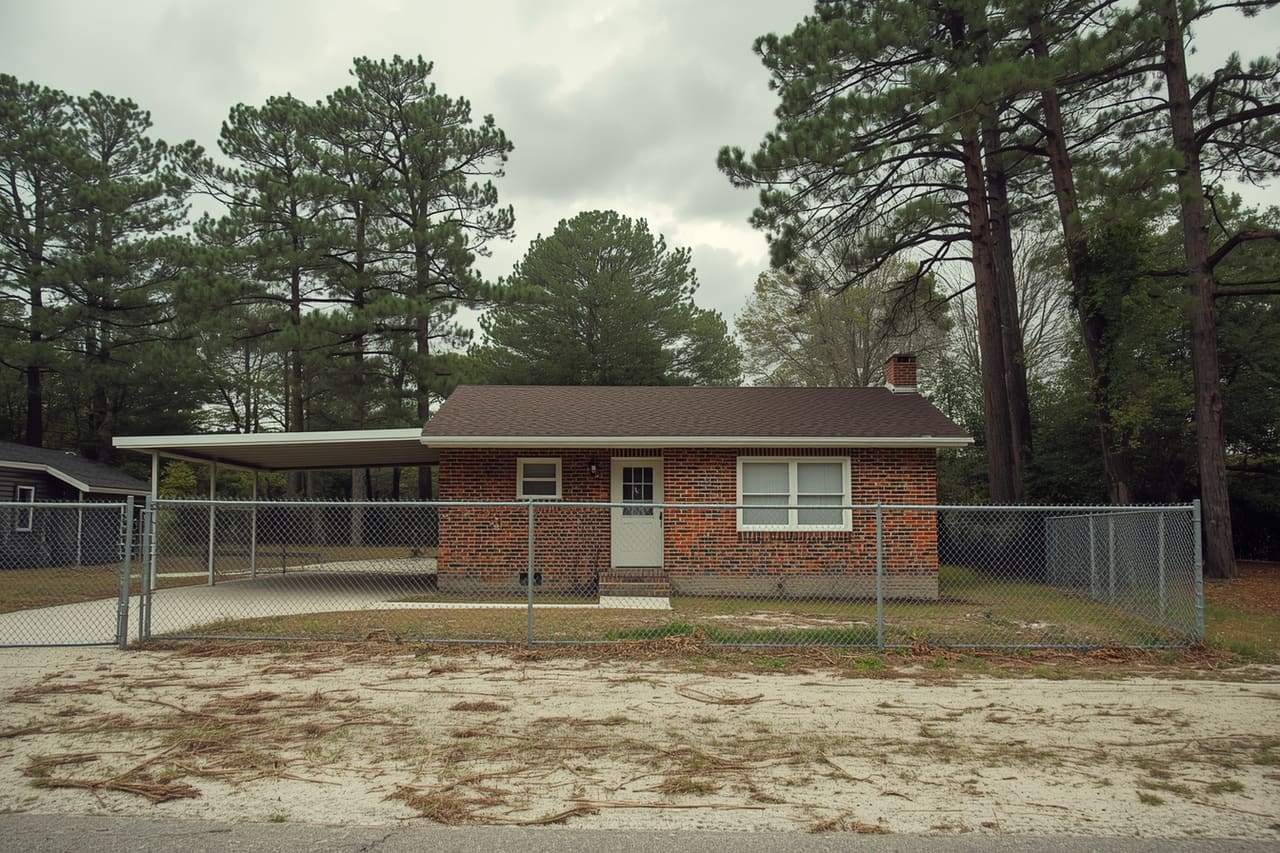
Garden City lies just northwest of downtown Savannah, wedged between the port, rail yards, the Savannah River marsh and the highway. Much of it is flat and close to sea level, and many of its streets were laid out mid-century, with modest brick and frame ranches, duplexes, older mobile and manufactured homes and apartment blocks. Water does not run off quickly here. It waits for the ditches to catch up.
Ditches, culverts and why they matter
In this part of Chatham County, drainage often depends on open ditches and culverts running along the road. When leaves, trash or sediment clog a culvert, a heavy afternoon storm backs water into yards and sometimes into houses. Walk your property after a storm and look at where the water stood. If a ditch in front of your house holds water for days, report it to the city or county and keep a record of the date.
Water that comes from the street into the house is flood water and is not clean. Treat it that way: wear boots and gloves, throw out porous items it touched and photograph first. See flood damage restoration.
Ranches on slabs and low piers
Many mid-century Garden City houses sit on a slab or just a foot or two above grade. A house that low gets wet from the bottom up. Water wicks into baseboards and the lower foot of drywall, and carpet over a slab holds moisture against the concrete. Even without a flood, a slab house can sweat when ductwork in the attic is poorly insulated, and condensate from the air handler can drip into a closet.
Houses on short piers have a crawl space that is only a foot or two high. Those are hard to inspect, and water that collects there can sit for months. If you smell mold inside but see nothing, a look underneath is often the answer. The crawl space mold removal page explains what a pro does in a tight space.
Older plumbing
Houses of this era may still have galvanized supply lines, cast iron drains or old polybutylene piping. These fail slowly and leak inside walls. A stain that widens, a drip you cannot trace or low water pressure can mean a failing line. A plumber should confirm the cause. After the repair, wet drywall and insulation should be dried or removed, as covered in water damage restoration.
Manufactured homes and apartments
Manufactured homes have thin skirting and often a floor system close to the ground, so water under the home soaks insulation and the belly wrap. A torn belly wrap lets moisture into the floor. In apartment buildings, a leak upstairs travels along framing. Whoever you rent from has duties around habitability; if the landlord does not respond, ask a tenant advocate or attorney, not a contractor, what your options are.
When flood water looks or smells wrong
Flood water anywhere can pick up fuel, oil and chemicals from roads, driveways and garages. If water carried any oily sheen or chemical odor, keep children and pets away and ask the county health department how to proceed before cleaning.
Mold after the water leaves
In this climate, a wet house starts growing mold within a couple of days if it stays warm and damp. Drying quickly and thoroughly matters more than any product. If you already see growth, see mold removal for what to expect. Limit your own cleanup to small patches on hard surfaces, about 10 square feet or less, with gloves, eye protection and a respirator, per EPA guidance.
What to ask a contractor
- A written scope that lists each room.
- Proof of liability insurance.
- Verifiable industry training; Georgia does not license mold work.
- A state contractor license number for the rebuild.
- How the crew will protect the unaffected parts of the house during removal.
Nearby
For a newer and drier part of the county, look at Pooler. Out toward the beach, Tybee Island has the same low ground with the added problem of salt water.