
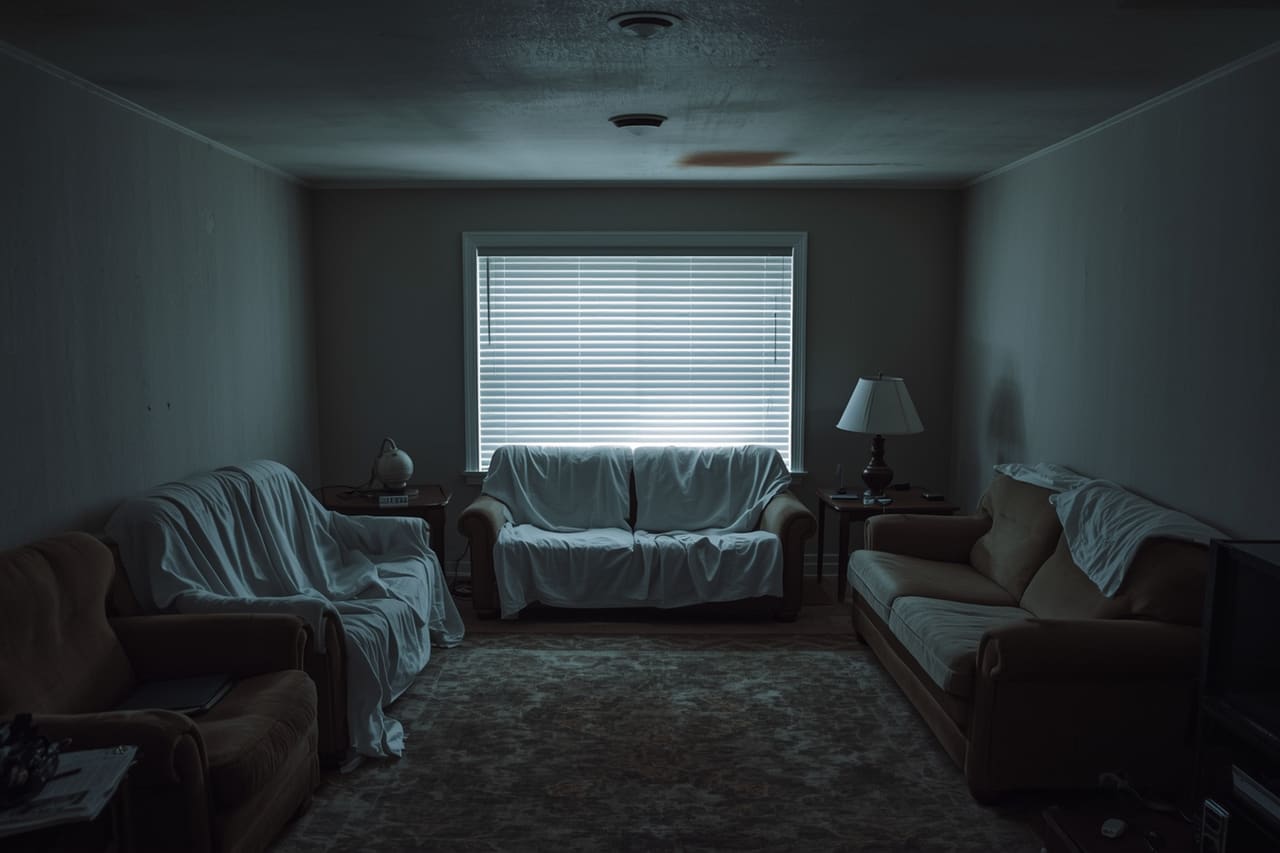
Second homes and vacation rentals are a big part of the housing around Hilton Head, Tybee Island, Bluffton and Beaufort. They share a weakness: when nobody is there, nobody notices the first sign of trouble. A leak, a stalled air conditioner or a house sealed with humid air inside can run for weeks. By the time someone opens the door, the smell has spread into furniture, mattresses and soft goods, and what could have been a small fix is a larger one.
How a shut house goes wrong
Indoor humidity follows the outdoors when air conditioning is off or barely running. On a summer day here, outdoor air can hold enough moisture that a closed house reaches damp conditions within days. Bathrooms with no ventilation fan running, closets with no airflow, mattresses and upholstery, books and window coverings pick up moisture first. Mold then appears as small gray, green or black patches, a film on leather and wood, or a smell people describe as musty or like wet towels.
Setting the thermostat very high, such as the upper 80s, to save electricity means the air conditioner rarely runs, and a system that rarely runs does not dehumidify. The same applies to a house where the AC is on but oversized, which cools the space quickly and shuts off before it has removed moisture.
Settings that help
- Keep the AC on while the house is empty. A moderate setting that lets the system cycle regularly is better than saving a few dollars and returning to damp rooms. Many owners pick a temperature in the upper 70s.
- Use a humidity target. The EPA suggests keeping indoor humidity roughly between 30 and 50 percent. Many thermostats and smart systems have a humidity setting or a dry mode; use it if yours does.
- Run bath fans or ventilation on a timer if the house is tight and the system allows it.
- Consider a whole-house dehumidifier where the AC cannot keep up, especially in coastal homes with large glass areas.
- Leave interior doors open so air circulates in closets and bedrooms, and prop closet doors if possible.
- Clear the kitchen before a long absence. Remove food, empty the refrigerator and leave the door propped open only if the unit is unplugged.
Sensors and alerts
A smart humidity and temperature sensor in the main living area, the primary bedroom and the HVAC closet gives a remote reading. Choose one that sends an alert to your phone when humidity stays above a set level, such as 60 percent, for more than a few hours. Water leak sensors under sinks, by the water heater, near the washer and by the air handler are inexpensive, and a smart shutoff valve at the main can stop a burst line. A simple log of readings during turnover days teaches you how your house behaves.
What to check at every turnover
A cleaner or property manager can make a short walk-through and take photos each time:
- Sniff the air at the front door and in each bedroom.
- Check under bathroom and kitchen sinks for moisture, rust or stains.
- Look at the ceiling below any upstairs bathroom and around the air handler.
- Run each faucet and flush each toilet, watching for leaks or slow drains.
- Look at window sills and corners for condensation or stains.
- Check the water heater pan and the AC drain pan and line.
- Look at the backs of closets, behind beds and along exterior walls.
- Check mattress covers, towels and bath mats for dampness.
Keep the photos with the date. A pattern of small problems, such as a damp smell that comes back every few weeks, tells you more than a single event.
When a guest reports a smell
Take it seriously and quickly. A smell is the house telling you that moisture is present somewhere you cannot see.
- Ask for details. Which room, what kind of smell, and since when?
- Visit or send someone. Look in the room, then in the places connected to it: the HVAC closet, the nearest bathroom, the wall behind it, the space below.
- Take a humidity reading and photos.
- Find and stop the water if there is a leak. Dry anything wet.
- Clean what you can. A small area, about 10 square feet or less, on a hard surface can be cleaned by following EPA guidance. Porous material, such as drywall, ceiling tile or a mattress, is not cleaned; it is discarded.
- Bring in a specialist if the smell has no visible source, the growth is larger, or a room needs to be taken out of service. See mold inspection and mold removal.
Guests who feel unwell are best told to see a doctor, and a property owner should not make health claims about mold either way. Offer to move guests to another unit if one is available.
Insurance and documentation
Insurance often treats a sudden event, such as a burst pipe, differently from slow humidity or a long-term leak. Policies can limit or exclude mold, and a vacant property can be subject to special conditions, such as how many days it may be empty before coverage changes. Read the policy, or ask your agent, about vacancy terms, short-term rental use, water damage and mold limits. Flood is covered separately, if at all.
Keep records that help any claim: dated photos, turnover logs, humidity data, repair invoices and the dates when you were notified. If a guest complains, write down the date and what was found and done. If a dispute arises over a booking, a deposit or a cleaning fee, ask an attorney, not a contractor.
Hurricane season departures
From June to November, tropical storms can arrive with a few days' notice, and rental owners may be hundreds of miles away. Plan ahead:
- Photograph the whole house, inside and out, before the season starts and again before you leave.
- Know who will check the property after a storm and how soon they can get there.
- Turn off the water at the main if you are leaving through an evacuation. Leave the electricity on or off according to your own plan and the advice of local officials, with the thought that a house without power cannot dehumidify.
- Move valuables and papers off the floor and away from windows.
- After a storm, enter carefully. Look for standing water, fallen limbs, sagging ceilings and anything electrical that got wet. Photograph first.
- Dry anything wet within 24 to 48 hours, as the EPA recommends, or it is likely to grow mold.
If water entered the house, see storm damage restoration and flood damage restoration. Properties on Tybee and Hilton Head are covered in more detail on the town pages for Tybee Island and Hilton Head Island.
Commercial-style rentals and larger properties
Owners of several units, small inns or condo buildings face the same issues at larger scale: one unit's leak becomes another unit's ceiling, and a closed section of a building quickly turns humid. See commercial water and mold for how larger jobs are handled.
When you hire help
Ask for a written scope and contract, proof of liability insurance and training credentials you can verify. Georgia and South Carolina do not license mold work today, so ask what the crew has done in rentals and vacation homes and how they work around bookings. For rebuild work, ask for the contractor's state license number. For a larger removal, ask for a clearance check by someone who did not do the removal.