
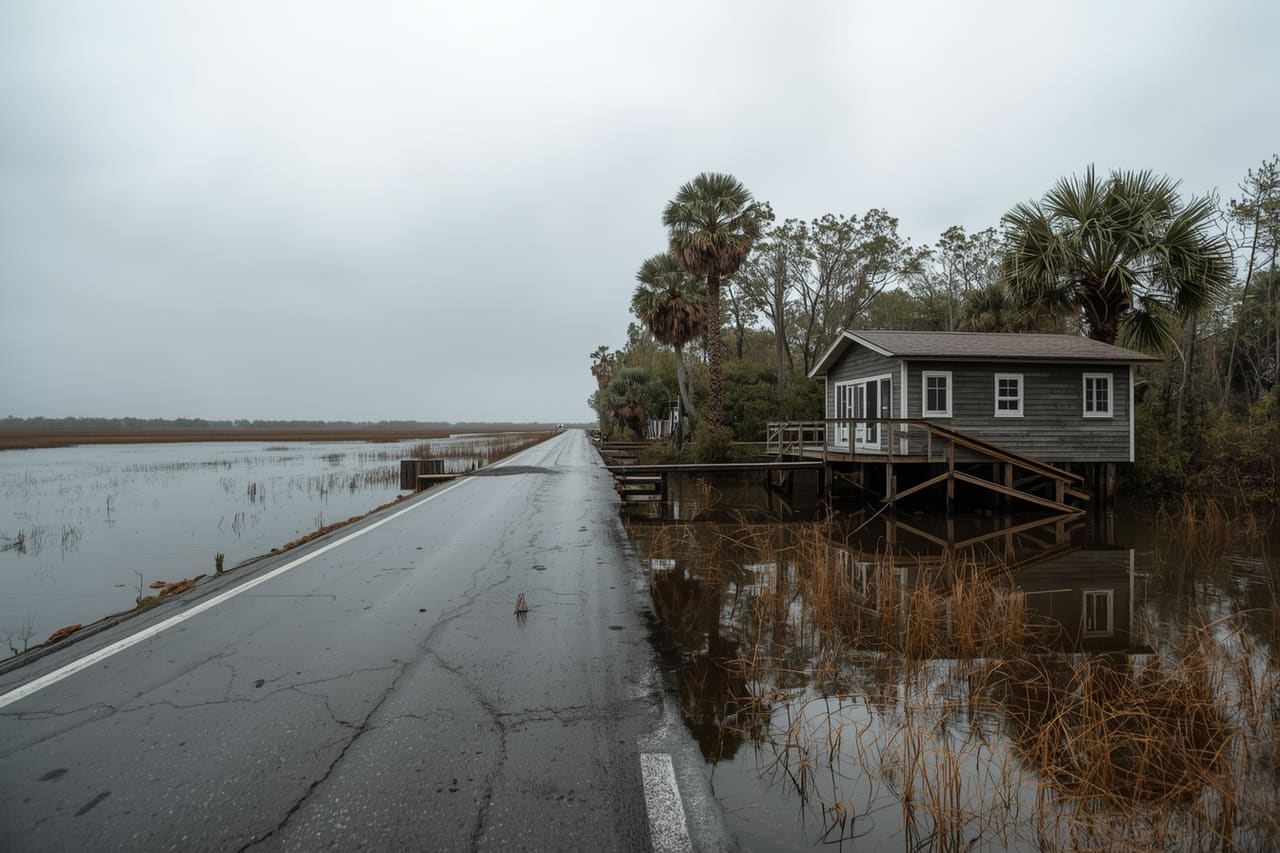
Flooding here comes from several directions. Tropical storms and hurricanes push surge up tidal creeks and rivers. Heavy rain overwhelms drainage in flat, low neighborhoods. King tides put water on low roads and into low yards even without a storm. Tropical Storm Debby in August 2024 flooded parts of Savannah and Bluffton, and homeowners who had never seen water inside found it in the house. Flood damage is searched on its own because it differs from a pipe leak: the water is dirtier, the safety concerns are larger and the insurance is separate.
Safety first
- Stay out until it is safe. Do not walk or drive through moving water. Standing water can hide holes, debris and downed lines.
- Power. If water reached outlets, the panel or appliances, leave the power off and have an electrician check before it goes back on. Never stand in water and touch electrical equipment.
- Gas. If you smell gas, leave and call the gas utility from outside.
- Contamination. Floodwater commonly carries sewage, chemicals, fuel and soil. Wear boots, gloves and eye protection, and wash well afterward. Health questions go to a doctor.
- Wildlife. Snakes, fire ants and other animals move into dry spots during floods, including attics and porches.
FEMA and the National Weather Service publish current flood guidance at fema.gov and weather.gov.
Documentation before cleanup
Photograph and video every room, the waterline on the walls, damaged items and the outside of the house. Write down the time the water arrived and left. Keep damaged items until the adjuster has seen them or approved their disposal, apart from items that are unsafe to keep. Keep receipts for emergency work, hotel stays and supplies.
What gets removed
Floodwater counts as contaminated, so more comes out than after a clean leak.
- Carpet, pad and rugs are usually removed.
- Drywall and insulation that touched floodwater are generally removed, often up to a line above the waterline.
- Cabinets made of particleboard swell and fall apart. Solid wood cabinets sometimes can be cleaned and dried.
- Mattresses, upholstered furniture and stuffed items are generally discarded.
- Hardwood and engineered flooring that sat in floodwater is often replaced, though old heart pine and other solid wood may be saved by slow drying in some cases.
- Appliances, HVAC equipment and water heaters low to the ground are checked by a technician before use.
Food, medicine and anything porous that touched floodwater is thrown out. Hard items such as tile, metal and glass can be cleaned and disinfected.
Mud, silt and cleaning
After tidal or creek flooding, a house often has a layer of silt and salt on the floor. Salt water leaves residue that can corrode metal and keep surfaces damp. Crews shovel and wash out the silt, then clean surfaces with an appropriate disinfectant. Wall cavities are opened to flush and dry, because mud and moisture sit behind baseboards.
Drying a flooded house
The steps are the same as in water damage restoration, with more caution about what goes in the drying equipment. Pumps remove standing water, extractors clear floors, air movers and dehumidifiers dry the structure and a crew monitors moisture daily. Drying a house after a regional flood in summer is harder because the air is warm and humid, so contractors are in demand and homes may wait. The EPA's guidance is to dry wet materials within 24 to 48 hours, which is often not possible after a major event. In that case, getting wet carpet and soaked drywall out and the house ventilated and dehumidified matters even more.
Mold after a flood
Mold begins within a day or two of wetting, and a flooded house in the Lowcountry in summer has everything it needs. Watch for musty smells and growth on baseboards, in closets and on the back of cabinets. If you see mold, the next step is mold removal. The CDC and EPA both publish guidance on cleanup after floods at cdc.gov and epa.gov.
Homes on raised foundations and crawl spaces have an extra worry. Floodwater under the house soaks insulation and subfloor and may leave silt. See crawl space mold removal.
Flood insurance versus homeowners insurance
Standard homeowners policies generally do not cover flood. Flood coverage comes from a separate policy, through the National Flood Insurance Program or a private flood insurer, and policies usually take a waiting period before they start. If you have a flood policy, call the insurer promptly, and follow its instructions for photos and mitigation. If you do not, check your policy or ask your agent, and look at FEMA's assistance information at floodsmart.gov and fema.gov. Homeowners policies often limit mold coverage as well.
Choosing help after a flood
After a major event, out-of-area crews and operators with no license appear. Slow down for a minute and ask:
- Who will be doing the work, and can you see proof of liability insurance?
- Is the scope in writing, with a price or a clear unit price?
- Are they asking for a large payment up front? Be cautious.
- For rebuild work, can you see the contractor's state license number? Both states generally require a license for larger repair jobs. The Georgia State Licensing Board for Residential and General Contractors and the South Carolina Department of Labor, Licensing and Regulation let you check.
Neither state licenses mold remediation today, so ask for verifiable industry training credentials and a written scope instead.
Preparing before the next one
Flood risk does not go away after a storm. If you live in a low area or near the marsh, consider documenting the house now, raising or moving valuables and HVAC equipment, learning your flood zone and checking your insurance before a storm is in the forecast, since flood policies carry waiting periods. Know where your water and electric shutoffs are.
Where to go next
For the full process of drying, see water damage restoration. If sewage was involved, see sewage cleanup. For storm damage above the waterline, see storm damage restoration. For belongings, see contents pack-out.