
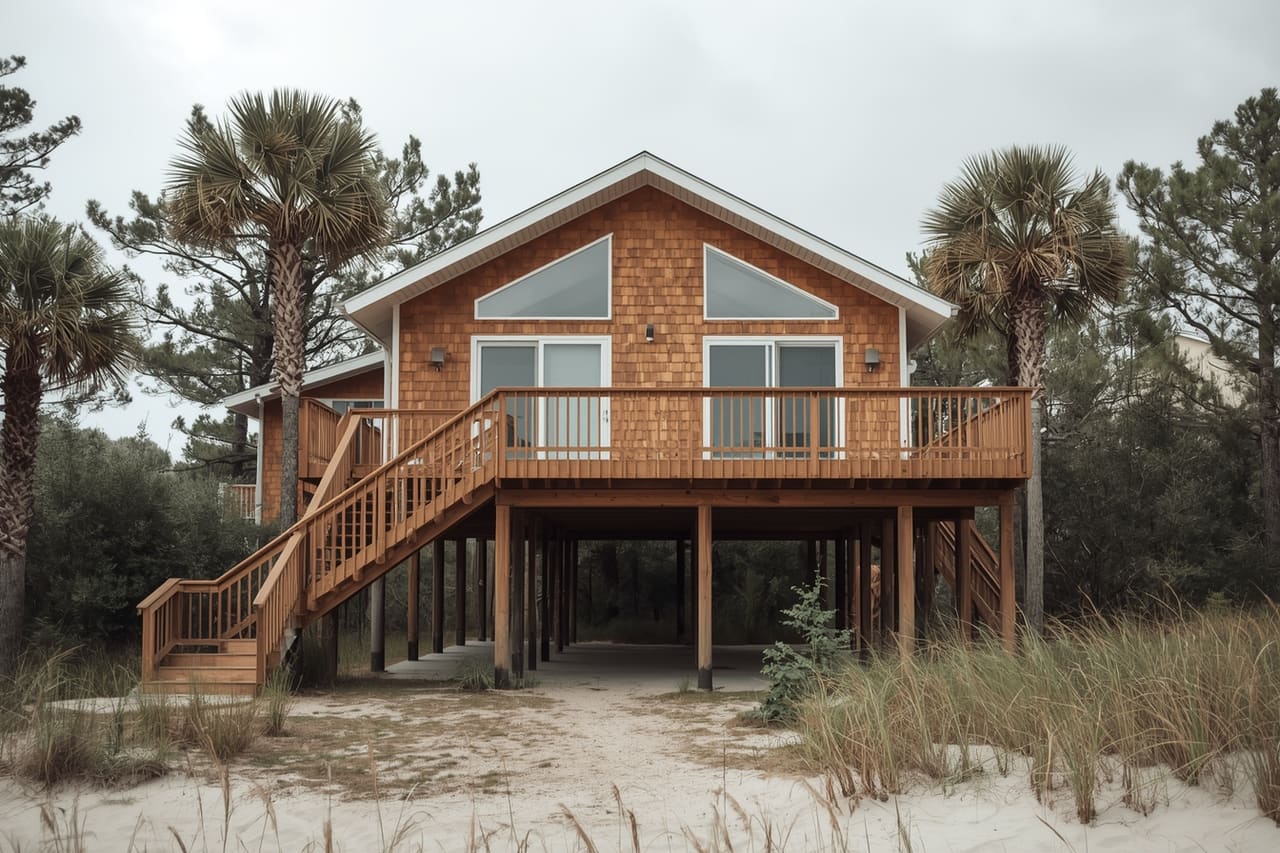
Hilton Head Island is built around planned communities, golf courses, lagoons and a long beach. A large share of the housing is second homes and rentals: villas, condos, townhouses and large homes inside gated communities. Some stand empty for weeks between guests or owners. That vacancy pattern, more than the age of the buildings, shapes most of the moisture trouble here.
The shut-up house problem
When a villa sits closed with the air conditioning off, or set high to save money, humidity inside climbs toward the outdoor level. Within days, bathrooms, closets and the backs of furniture can start to grow mold in a house that looks clean. A guest who arrives and says it smells musty is giving early notice. Look at the HVAC closet, under sinks, behind toilets and along exterior walls, and run a humidity reading in each room.
Set the thermostat so the air conditioner runs enough to keep indoor humidity down, and consider a monitor that texts when readings climb. The full set of checks is in the guide on closed-up homes and rentals.
Rentals and the turnover calendar
A rental has a rhythm: guests leave, a cleaner comes, new guests arrive within hours. A slow drip under a kitchen sink or a running toilet can go through several turnovers before anyone sees it. Ask your cleaning crew to report any odor, stain, soft spot or wet cabinet floor and to take a phone photo. Keep a log. If damage is found, document the dates, since cancellation and insurance questions often depend on them. The page on commercial water and mold covers larger rental properties and resorts.
Stucco, coastal wind and windows
Many island houses wear stucco or fiber cement. Properly flashed, they work. Where flashing is missing or caulk has failed, wind-driven rain gets behind the finish and wets the sheathing for years. Stains at window corners, bubbled paint, a soft spot under a balcony and a smell that is strongest after rain are warning signs. Repairs here usually mean opening the wall, so get a clear written scope and ask who is doing the framing and exterior repair, and for that contractor's state license number.
Lagoons, storm surge and tropical systems
The island's low elevation, its lagoons and the sound mean storm surge and heavy rain are real issues. Water that rises from the sound or a lagoon is not clean, and salt makes cleanup harder. Ground-floor garages and storage rooms of raised houses take the hit first. Decide in advance who will check the house after a storm if you live elsewhere, and photograph the home before you leave for hurricane season. Read storm damage restoration and flood damage restoration.
Flood coverage is separate from a homeowners policy, and many condo associations carry their own coverage, so find out what covers the building and what covers your unit and belongings. Ask your agent.
Older island homes and crawl spaces
Early island houses from the first decades of development, and raised homes in the older communities, often sit on piers with a crawl space. Insulation hanging in a damp crawl space, ducts sweating in July and torn ground cover feed the mold you may smell in the living area. See crawl space mold removal.
Questions to put to any crew
- What exactly is in the written scope, room by room?
- Can they show proof of liability insurance?
- What verifiable industry training does the crew have? South Carolina does not license mold work, though a bill is in committee.
- Who holds the state license for the repair and rebuild?
- Will someone independent check the work on a large job?
Nearby
Across the bridge, Bluffton mixes new construction with historic cottages. For another resort-style barrier island with its own tide problems, see Tybee Island.