
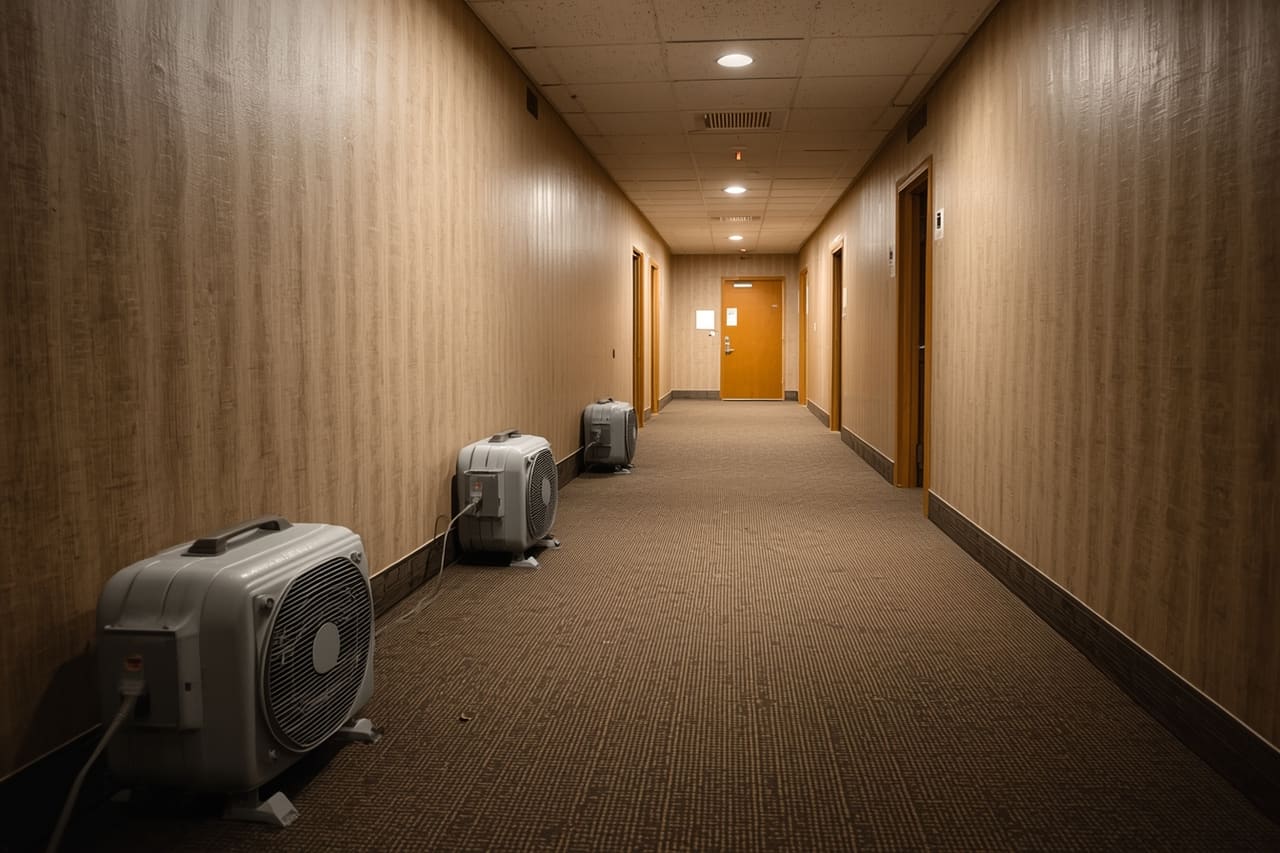
Commercial water and mold work follows the same principles as residential work, with different pressure points: tenants, customers, staff, landlords, insurers and schedules. In Savannah and the Lowcountry the mix is wide, from hotels, inns and restaurants downtown and on the waterfront, to retail and offices in older brick buildings, to vacation rentals and condo buildings on Hilton Head and Tybee Island.
What makes commercial jobs different
- Larger areas and shared systems. Water travels between units, floors and shared walls. Ceiling systems, kitchens and mechanical rooms spread damage quickly.
- Occupants. Staff, guests and neighboring tenants need protection from dust, odor and moisture, and often need to stay open while the work runs.
- Multiple parties. Owner, property manager, tenant and insurer each have a say, and responsibility for the cause may be disputed. Lease and liability questions go to an attorney.
- Documentation. Business interruption claims depend on records: moisture logs, photos, dates, scopes and invoices.
- Code and health rules. Restaurants and lodging face health department and fire rules. Ask the local health department what applies before reopening.
Common causes
Roof and envelope leaks. Flat roofs, parapets and old flashing leak in storms, and salt air wears sealants. Wind-driven rain gets behind stucco and storefront glass.
HVAC and condensate. Large systems on roofs and in mechanical rooms overflow when drains clog. Rooftop units and ceiling plenums drip into ceilings in humid summer weather.
Plumbing and kitchen failures. Grease line backups, dishwasher leaks, ice machine lines and water heaters are common in restaurants and hotels.
Fire sprinkler discharge. A head that opens releases a lot of water quickly.
Storm and tidal water. Ground-floor spaces near the river, the marsh or low streets can flood in storms and high tides. See flood damage restoration.
Closed or vacant units. A unit left empty with the AC off can develop mold in a few weeks of summer humidity.
Hotels, restaurants and shops downtown
Older buildings in the historic area have brick, plaster, wood framing and old roofs. Water can sit in masonry walls for a long time, and dry rot and mold can develop behind finishes. Use care with historic materials, and check with the city's historic preservation office before exterior changes. Pre-1978 buildings may also have lead paint or asbestos, which affects demolition. Restaurants have additional concerns: food contact surfaces, cooling equipment, kitchen floors and drains, and health department sign-off.
Vacation rentals and short-term rental properties
Rentals on Hilton Head, Tybee Island, Bluffton and Beaufort are often vacant between guests, and some sit shut for weeks in the off season. Problems start with a leak or AC fault nobody sees until a guest notices a smell or stain. Faster discovery and a plan for turnover checks reduce losses. The guide on closed-up homes and rentals explains humidity settings and checks. When a unit is damaged, it may need to be pulled from the booking calendar, so a clear scope and drying timeline help the owner and manager plan.
How a commercial job runs
- Assessment. Moisture mapping, photos and a written scope. Scope includes what is dry, what is wet, what is removed and what gets cleaned.
- Mitigation. Water extraction, removal of wet materials and structural drying. See water damage restoration.
- Containment and air control for mold, with attention to shared air systems. See mold removal.
- Documentation. Daily readings, equipment logs and photos.
- Verification. On larger jobs, a check by someone independent of the removal crew, which may include sampling. See mold inspection.
- Rebuild and reopening. Repairs, then a walkthrough. See repairs after water damage.
What to ask
- What is the written scope and the schedule, and which areas reopen first?
- How will the work be separated from open areas and shared air systems?
- What is the plan for the HVAC?
- How will drying and clearance be documented?
- For rebuild, can I see the contractor's state license number? Commercial work in Georgia and South Carolina generally needs a state contractor license, which can be checked with the Georgia State Licensing Board for Residential and General Contractors or the South Carolina Department of Labor, Licensing and Regulation.
- Can I see proof of liability insurance?
Neither state licenses mold inspection or remediation today, so ask for verifiable industry training credentials and a written contract.
Insurance
Commercial property policies, business interruption coverage and flood policies each have their own terms. Many exclude flood and limit mold. Read your policy or ask your agent early, and tell your insurer before work begins. Lease questions about who pays go to an attorney.